

Most people believe that different smartphone brands mean completely different companies. But the reality of the mobile industry is quite different. Many popular brands are actually part of the same parent company, following what is commonly known as the “sister brand” concept. The branding, marketing, and target audience may change, but the core technology, design language, and even hardware often remain very similar.
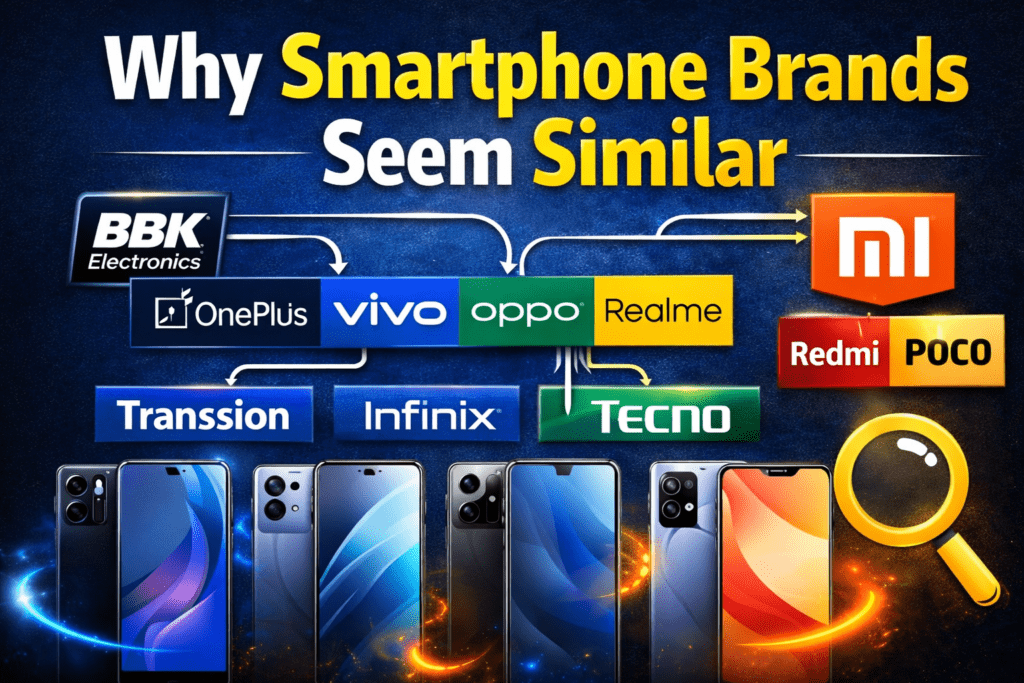
One of the most well-known examples of this structure is BBK Electronics. Under this single umbrella come brands like OnePlus, Vivo, Oppo, and Realme. Think of them as phones from the same family. Research and development is shared, technologies move across brands, and sometimes even camera tuning or charging solutions feel identical. The real difference lies in positioning. Oppo focuses more on cameras and a premium feel, Vivo leans towards design and selfie-centric features, OnePlus highlights performance and a cleaner software experience, while Realme is aimed at value-for-money buyers and the youth segment. If you follow smartphone launches regularly on PassionateGeekz, you’ll often notice these similarities.
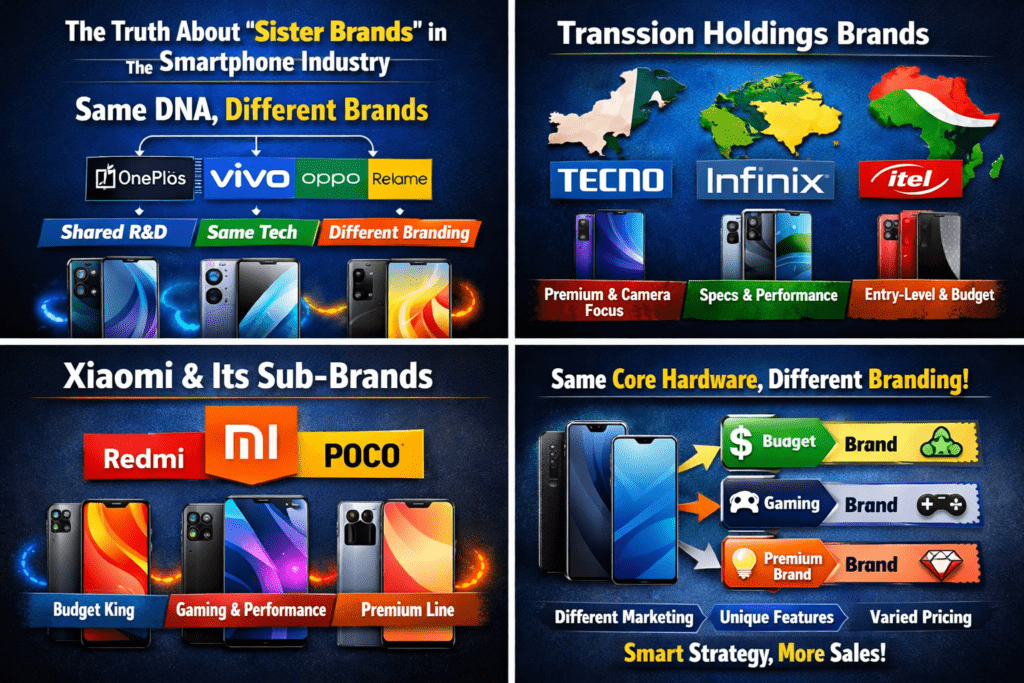
The second major group is Transsion Holdings, a company that is extremely strong in markets like Africa, Pakistan, and increasingly India. Under Transsion come Tecno, Infinix, and itel. Tecno and Infinix, in particular, share a very similar DNA. Tecno usually positions itself as a slightly more premium brand with stronger camera focus, while Infinix targets young users who want aggressive specifications at competitive prices. itel, on the other hand, is clearly meant for entry-level and basic smartphone users. This segmentation helps Transsion cover multiple price brackets without confusing its audience.
Then there is Xiaomi, where the strategy is slightly different but still follows the same core idea. Xiaomi operates with sub-brands like Redmi and Poco. Redmi is the budget and mass-market champion, Poco focuses on performance and gaming for younger users, and Xiaomi’s own branded phones sit a bit higher with a more premium approach. Even here, hardware sharing is common, but branding and pricing change the way the product is perceived. You can find more insights on such brand strategies and smartphone comparisons on PassionateGeekz Mobiles.
The logic behind this entire model is simple. Take similar hardware, change the branding, tweak the features slightly, adjust the pricing, and market it differently. In the end, companies can reach more users, dominate more price segments, and increase overall sales. So the next time you feel that one brand looks suspiciously similar to another, remember that it’s probably not a coincidence—it’s just smart business.
Stay connected and thanks for reading. Your feedback helps us improve, so make sure to add a comment below if you have any suggestions or thoughts to share.

8 Comments